
India
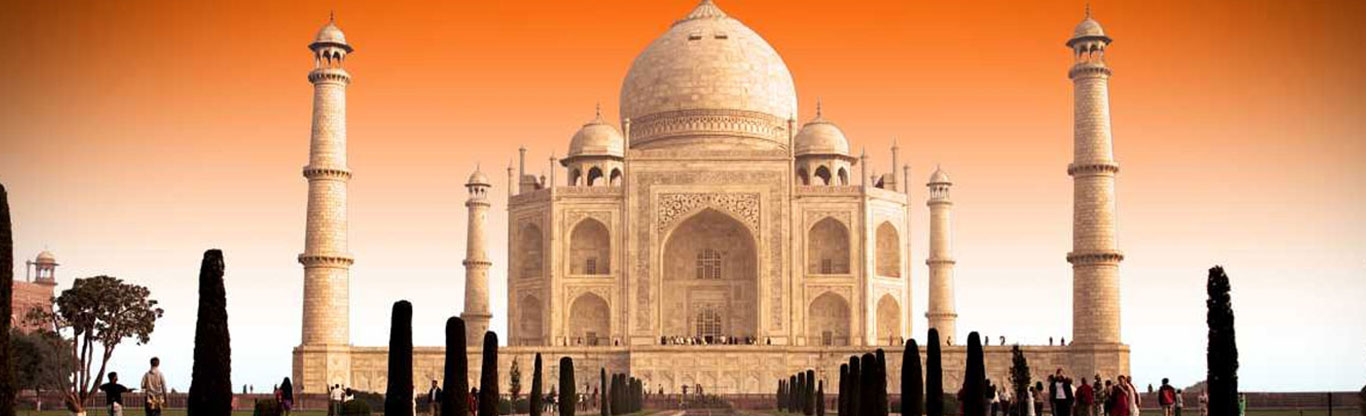
In a nation as diverse as India, it is difficult to find a reason why one should not study there. Over the centuries, the ethnic merging from Aryan, indigenous, Arab and European peoples combined to create a truly distinct and unique Indian culture. Geographically, it offers a rich variation of landscapes, from the breathtaking mountains of Himachal or Arunachal Pradesh to the arid deserts of Rajasthan and the tropical lush expanses of Kerala.
The population is composed of Indo-Aryan, Dravidian, Mongoloid and other ethnicities; practices Hinduism, Islam, Christianity, Sikhism, and various other religions; and speaks Hindi and English along with 14 other official languages. Furthermore, the Indian culture ‘one of the oldest in the world’ has grown and modernized to become a major political and economic global presence in today’s world.
For students interested in studying non-western art, architecture and music, India is a prime study abroad location. This ancient land has compiled many layers of architecture and symbolism over the centuries. Early colleges and monasteries that were built to promote the learning and proliferation of literature in Sanskrit were replaced with mosques and other religious structures dedicated to Islam and Hinduism. Throughout all are elements from a distinct Indian heritage depicting musicians, entertainers and famous couples and figures from myth and history. The arts of puppet making, block printing, batik, silk screening, blue pottery, painting, sculpting and marble cutting that can be found in the state of Rajasthan are just a sample of the wealth of artistry and craftsmanship still available in India.
Today, India has become a key location for businesses looking to export, import or simply invest. Recent growth in the Indian economy, averaging about 9% in the 2002-2003 period, has caused it to account for about 1% of global exports. Imports have also grown as a reflection of a strengthened economy and a hopeful market. Domestic Indian industries, particularly in the communications and software sectors, are experiencing phenomenal growth and promise to provide many opportunities for graduates in these areas. India’s largest private sector corporation, Reliance Industries, which specializes in oil and petroleum, is looking to expand to information technology and telecommunications in India and has already expanded its telecom industry to the US market. As a one who had studied in India and was familiar with both Indian and American culture, your study abroad experience would be invaluable in finding you work with an international firm such as Reliance Industries.
Music, dance and film students will also find plenty to absorb their interests during a stay in India. In addition to traditional dances such as the bhangra, dandiya rass, and qawwali and instruments such as the sitar, tabla, veena and tanpura, western music such as hip-hop and pop has made its way into the pop culture of India to create a mesmerizing fusion of modern dance beats and traditional Indian melodies and rhythms.
The Indian education system has conquered a strong position in international circuit. India is a popular destination for higher education amongst foreign students as the country has an unparalleled variety of academic courses. A large number of students fly to India every year from all corners of the globe to satisfy their desire for learning more. Studying in India, the second largest higher education network in the World is an enriching experience in itself.
A welcoming atmosphere, non-discriminative approach and an assured educational and career growth is what attracts students from all over the world to India and assured educational and career growth. There are universities focusing on the study of medicine, arts and language, journalism, social work, business, commerce, planning, architecture, engineering, and other specialized studies. Most Indian universities teach in English Medium and conduct special language classes for those weak in English.
India has an impressive list of universities and colleges sprawled across its major states and cities, which have inducted numerous foreign students from time to time. With 343 universities and 17000 colleges, India offers a wide spectrum of courses that are recognized globally. Apart from undergraduate, postgraduate and doctoral courses, there are many training and diploma-level institutes and polytechnics that cater to the growing demand for skill-based and vocational education. The quality education that India offers is within the reach of every income-group considering the reasonable fee structure. With 66 distance education institutions functioning in 60 universities besides 11 open universities, India has an enlarged outreach of distance education as well.
States:
Andhra Pradesh, Arunachal Pradesh, Assam, Bihar, Chhattisgarh, Goa, Gujarat, Haryana, Himachal Pradesh, Jammu and Kashmir, Jharkhand, Karnataka, Kerala, Madhya Pradesh, Maharashtra, Manipur, Meghalaya, Mizoram, Nagaland, Orissa, Punjab, Rajasthan, Sikkim, Tamil Nadu, Tripura, Uttar Pradesh, Uttarakhand, West Bengal.
Why India
India is the third biggest economies consist of 1.2 billion populations with a diverse culture. Apart from thousands of language spoken in India, India is a secular state with a functioning secular identity when compared to another country. With a biggest and functioning democracy India has a unique history of never invading any country in last 6000 years. The national language is Hindi, which is derived from its mother language Sanskrit (which is mother of all language).
Also India is very famous for its cultural and linguistic studies. Students across the world can explore different religions and culture which is been commonly practiced in every corner of the state. Students from Nigeria, Qatar, Bahrain, Saudi, UAE, Muscat, and many other South African countries regularly come to India to pursue the higher secondary and undergraduate courses. In India there are more than 300 Universities providing education in management, medicine, architecture, engineering and many more.
More than 30,000 students come across from every corner of the world to study in India. It has been most famously said by many writers and journalist that the entrance exams of IIT’s (Indian Institute of Technology) is far more difficult than MIT, whereas entering IIM’s are far more difficult than Harvard. India has a unique syllabus of management studies and architecture. Reasons why one must go to India for studying:
- Affordable Education.
- Wide Choice.
- World-class institutions and faculty.
- International Exposure.
- Networking with world markets.
- Friendly Environment.
- Holistic Education.
- Come to where the action is.
- Building global leaders.
- Focusing on the new knowledge economy.
- World hub for business process outsourcing.
- Develops the creative side of the personality.
- Beautiful country, beautiful people.
- An experience of a lifetime.
Admission
Application Procedure for international student’s:
Academic session in India is normally from July to June. It is therefore advisable to start making enquiries and research about the courses and institutions at least 10 months in advance. By November / December you should finalize the course of study and the institutions where you want to apply.
International students are required to send the following documents:
- Attested copies of certificates of the qualifying examination.
- Two copies of passport size photograph. And
- Non-refundable processing fee/registration fee – through a demand draft drawn.
Cost of Education
In India there are two types of universities, private as well as government. Though the government universities have negligible fee, whereas the fees of private universities are little expensive. Once you have decided to study in any of the above universities then the cost varies from university and its location. Private Universities have an expense of around Rs60, 000 per year for undergraduate courses. Whereas for higher studies the fees are Rs 1, 50,000 per year. After which the student had to decide about accommodation.
Accommodation:
- To rent an apartment (will cost around Rs 10,000-15,000).
- To become a paying guest (will cost around Rs 7000- Rs 9000 with food included).
- To rent a room in student’s residence (will cost around Rs 4,000- Rs 7,000).
- Or to live in a hostel.
Apart from that there are daily travelling charges as well as food, entertainment, gym and many more charges which will cost students about Rs6000- Rs9000 monthly (depending upon the ability of spending of an individual).
Universities
- Indian Institute of Science (IISC) Bangalore. …
- Indian Institute of Technology Delhi (IITD) …
- Indian Institute of Technology Madras (IITM) …
- Indian Institute of Technology Kanpur (IITK) …
- University of Delhi. …
- Indian Institute of Technology Roorkee (IITR) …
- Indian Institute of Technology Guwahati (IITG) …
- University of Calcutta.
- Indian Institute of Technology Bombay (IITB)
- Indian Institute of Technology Kharagpur (IITKGP)