
Philippines
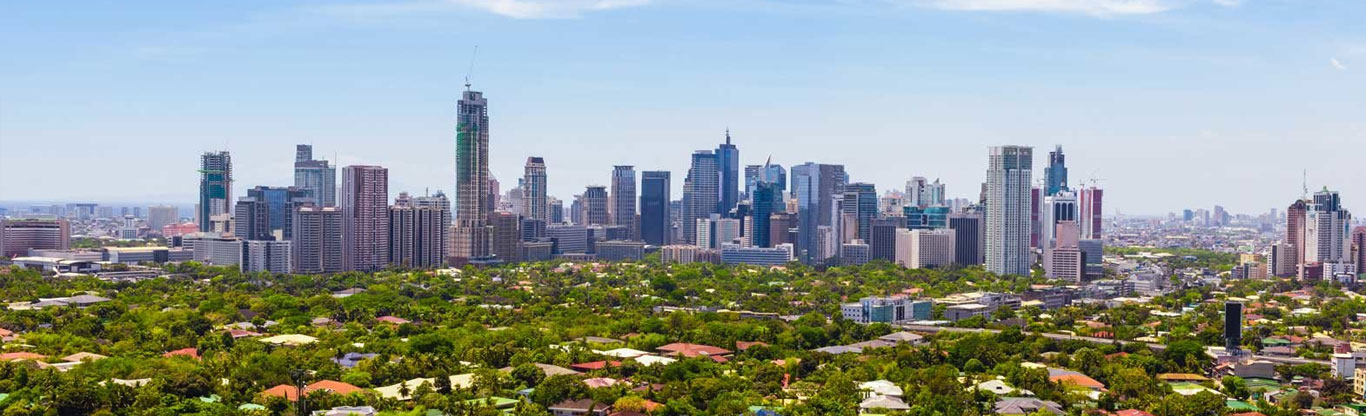
For such a remote country, the Philippines have been somewhat of a crossroads of civilizations for thousands of years, and inhabited even well before then. “Archeological and paleontological evidence suggests that Homo sapiens existed in Palawan,” one of the more than 1,700 islands comprising the country, “about 50,000 years ago. These inhabitants are called the Tabon Man. During the Iron Age, Austronesian-speakers came from South China and Taiwan via land bridges and settled in the Philippines. Ethnic Chinese merchants arrived in the 8th century” (www.en.wikipedia.org).
After that, the country was “discovered” by the Portuguese, and was, in one way or another, inhabited by “Japanese, Portuguese, Dutch and British forces, all of whom also had an interest in the Philippines” (www.en.wikipedia.org). Many countries around the world, of course, were colonized by various groups of people. But what makes the case of the Philippines so interesting is its location, 750 miles from continental Asia, and for that reason not on the normal land-trade and conquest routes of some other Asian countries. But it nonetheless served as the Pacific base for any number of colonial powers for much of its existence.
Today, however, the Philippines is a sovereign nation presided over by President Gloria Macapagal-Arroyo. The Philippines, as a nation, is home to an astounding number of languages-more than 170 spoken, according to some estimates. English and Filipino, however, are the two official ones, which make full-time study there relatively easy from a language-comprehension stand-point. But don’t expect to hear much English once you start traveling to the more remote regions and islands of this country, for despite the rather modern attitude and look of much of the Philippines, there are still many indigenous tribes residing throughout the country.
Adventurous visitors-and especially students majoring in anthropology and local history-will be fascinated by their visits to, for example, the mountain tribes of Luzon, people who have inhabited the islands of the region for thousands of years and whose culture remains, for the most part, defiantly intact. The people of the Philippines are famously accommodating to foreigners.
This makes it that much easier for tourists and students alike to take full advantage of all that this country has to offer. From the Capissan Caves in Kasibu to the bustling capital city of Manila, the possibilities for adventure are limitless. Most visitors divide their time between the outdoor activities for which the country is famous and the more urban-centered ones that will reward even the most jaded sophisticate.
Don’t be surprised, though: Like most large cities in the world, Manila suffers from its fair share of poverty and crime. This, however, is not enough to detract from the overall positive experience that most visitors to the capital have. Students, too, are increasingly making the Philippines a destination for either study abroad or full-time enrollment in a college or university. Among foreigners, the most popular institutions of higher education tend to be centered in Manila, though they are certainly not the only option.
It simply depends of what you would like to study, and where you would like to spend your college years. Whatever you decide, a college experience in the Philippines is sure to be as unique and exciting an experience as you can possible have. These are some of the fast facts about the Republic of Philippines that students would like to know when they decide on pursuing higher studies in Philippines. The information on Philippines provided here is meant for students who want to have a rough idea about Philippines at the first glance itself.
Some Facts about Philippines:
Capital of Philippines: Manila
Largest city: Quezon City Total Area of Philippines 300000 km.2
Language(s): Although Filipino and English are the official languages in Philippines, Bikol, Cebuano, Ilocano, Hiligaynon, Kapampangan, Pangsinan, Waray Waray are also spoken in certain parts of the country.
Government: Unitary Presidential Constitutional Republic President: Gloria Macapagal-Arroyo
Population: 76, 504, 077 (According to 2000 census).
Literacy rate: 92.28% (2000 Census). Currency: Peso
Why Philippines
Education system of Philippines resembles closely with that of the American system, as it was a colony of America for more than 48 years. The Bureau of Elementary Education is responsible for making preprimary and primary education available for every Filipino child and maintaining its standard. Pre-primary education in Philippines starts at the age of 3. Up to the age of five they attend nursery school and then go to the kindergarten. Primary education in Philippines starts at the age of six.
The primary medium of instruction in all the schools of Philippines is English. Filipino is considered the second language. In some of the schools Spanish (Philippines was a colony of Spain before the Americans took over) and Arabic (5% of the population is Muslim) is also taught. Six years of primary education in Philippines is compulsory and provided for free in the public schools. With the abolition of the National Elementary Achievement test (NEAT) in 2004, students need not produce any score for getting admission to the govt. high schools.
However, the private schools may conduct some entrance exam for admitting students in the high school. Secondary school education in Philippines consists of four years and provided for free by the Bureau of Secondary Education in the public schools. Students can move up to either two or three years of technical or vocational education in Philippines or pursue higher education in a college or university. Higher education in Philippines is provided by both private and public institutes and the commission for Higher Education is responsible for formulating and implementing policies, plans and programs for the development and efficient operation of system of higher education in Philippines. There are more than 1647 higher education institutes in Philippines at present.
Students from various parts of the globe come to Philippines for pursuing higher education. Most of these foreign students come from America, Korea and Taiwan. For students interested in studying abroad in Southeast Asia, World Endeavors Study in the Philippines program is hard to beat. This is one of the most affordable programs available at one of the leading universities in Southeast Asia.
As all courses are taught in English, you will have the opportunity to earn academic credit while continuing your studies in any of hundreds of courses from dozens of subject areas. You will live and study alongside Filipino and international students and can even choose to focus your study on Southeast Asian cultures and languages.
Highlights:
The Philippines is made up of over 7,000 tropical islands stretching across a vast area of ocean in Southeast Asia. Its diverse ecosystems along with its even more diverse cultural history make it one of the most fascinating destinations in the world. As home to lively festivals, friendly people, cities and villages, beautiful beaches, tropical rainforests, volcanoes, waterfalls, and coral reefs teeming with life, the Philippines is truly a unique jewel in the South China Sea. Manila, the capital city of the Philippines, is at the same time an overwhelming and fascinating city.
The vast, sprawling city offers visitors many opportunities to experience the unique culture of the Philippines, from open air markets and busy streets, to museums, colonial buildings, and parks. World Endeavors study abroad program is located at the campus of the University of the Philippines-Diliman, which is located in Quezon City, in the northeastern part of the Manila metropolitan area.
Courses: Students can choose from hundreds courses across four schools: Arts and Letters, Social Sciences and Law, Management and Economics, and Science and Technology. Preliminary selection of courses occurs during the application process. Course selection will be finalized after arrival on campus. Food: There are many choices for food on campus. From the favorite fishballs to vegan fare, food sources vary from vendors, kiosks, snack bars to bake shops, canteens and restaurants, each with different specialties and price ranges.
Admission
- Send Application Letter addressed to the Admissions Officer of St. Paul University Manila or download Application Form at SPU Manila website at www.spumanila.edu.ph
- Prepare the following:
- Personal History Statement duly signed with 2×2 photo. Form downloadable at www.immigration.govg.ph
- Scholastic Records authenticated by the Philippine Embassy/Consulate located in the student’s country of origin or legal residence
- Photo-copy of data page of passport showing photo, date & place of birth, date of issue & expiry
- Birth certificate or its equivalent authenticated by the Philippine Embassy/Consulate located in the country of origin or residence.
- Medical Health Certificate with life size chest X-ray and laboratory reports.
- Proof of adequate financial support to cover expenses for the student’s accommodation, subsistence, school dues and other incidental expenses.
- Police Clearance Certificate issued by the National Police Authorities of the student’s country of origin or legal residence authenticated by the Philippine Embassy/Consulate located in the student’s country of origin or legal residence. (For someone who has resided in the Philippines for more than 59 days, an NBI -National Bureau of Investigation clearance is also required.)
- Two letters of recommendation from Principal, Adviser, Counselor or any official from school graduated (Forms available at the Admissions Office; or downloaded from www.spumanila.edu.ph)
- Recommended for applicants coming from non-English speaking countries: Take English Test – TOEFL, IELTS or TOIEC. If none of the above English tests have been taken previously, the student applicant takes the English Diagnostic Test at St. Paul University Manila to determine his/her English proficiency level and need for supplementary English Lessons before enrolment).
Cost of Education
Education in the Philippines is inexpensive, if based on currency value compared to the cost of education in Japan, Singapore and even Thailand. However, it is expensive for Filipinos who earn lesser than their Asian counterparts. Nevertheless, Filipinos value education like a hidden treasure-the key to success. Most indigent families strive to send the eldest or the smartest child to school in order to redeem and uplift the families’ condition.
Most of these families have at least one or two members who were able to reach university. At present, the cost of education is still affordable and Filipinos, poor and rich alike still enjoy its benefits. But one must be aware that public schools have cheaper expenses than those in private particularly international schools. Public elementary and secondary schools are provided and subsidized by the government for free.
While private elementary and secondary schools are expensive and even more expensive for foreign students. Most private elementary and high schools in Manila and in major cities cost between 2,000 and 4,000 pesos per month for tuition and miscellaneous fees. But exclusive schools (all girls or all boys) may cost 10,000 pesos per month. Provincial private elementary and secondary schools may cost 500 to 1,000 pesos per month for tuition fees.
Tuition fees in universities and colleges also vary on the type and location of the school. Private universities and colleges in Metro Manila are much higher than those of state universities. According to research, the annual tuition fees of these private universities or colleges are nearly half the average income of Filipino families
Applying for a visa
- Two copies of accomplished Visa Application Forms with 2×2 photograph
- Passport valid for at least six (6 months) beyond the date of stay in the Philippines
- NOTICE OF ACCEPTANCE and LETTER OF ENDORSEMENT from Philippine School/University
- Original copies of Documents
Work After studies
The Philippines is currently battling high unemployment rate at 7.3% overall, concentrated mainly in Metro Manila. There are several willing workers but job opportunities have not been that much despite the fact that the country ranks among the highest in the world in terms of literacy rate. At present, the country continues to control its population as well as send workers abroad to help the Philippine economy.
Expatriates can successfully find jobs in smaller cities or run businesses instead of being employed. Small businesses can do very well in provinces. In Manila, expatriates can still find employment considering that they have the right knowledge and skills on the fields in demand at the moment such as business, marketing, computer technology and engineering.
Universities
- University of the Philippines Diliman
- University of Santo Tomas
- Ateneo de Manila University
- De La Salle University
- University of the Philippines System
- Polytechnic University of the Philippines
- University of the Philippines Manila
- University of the Philippines Los Baños
- Mapua Institute of Technology
- University of San Carlos
- Universidad de Zamboanga
- University of the Philippines Mindanao
- University of the East Manila
- University of Southeastern Philippines
- Saint Louis University, Baguio City
- Mindanao State University – Iligan Institute of Technology
- Ateneo de Davao University
- Asian Institute of Management
- Silliman University
- De La Salle-College of Saint Benilde