
Australia
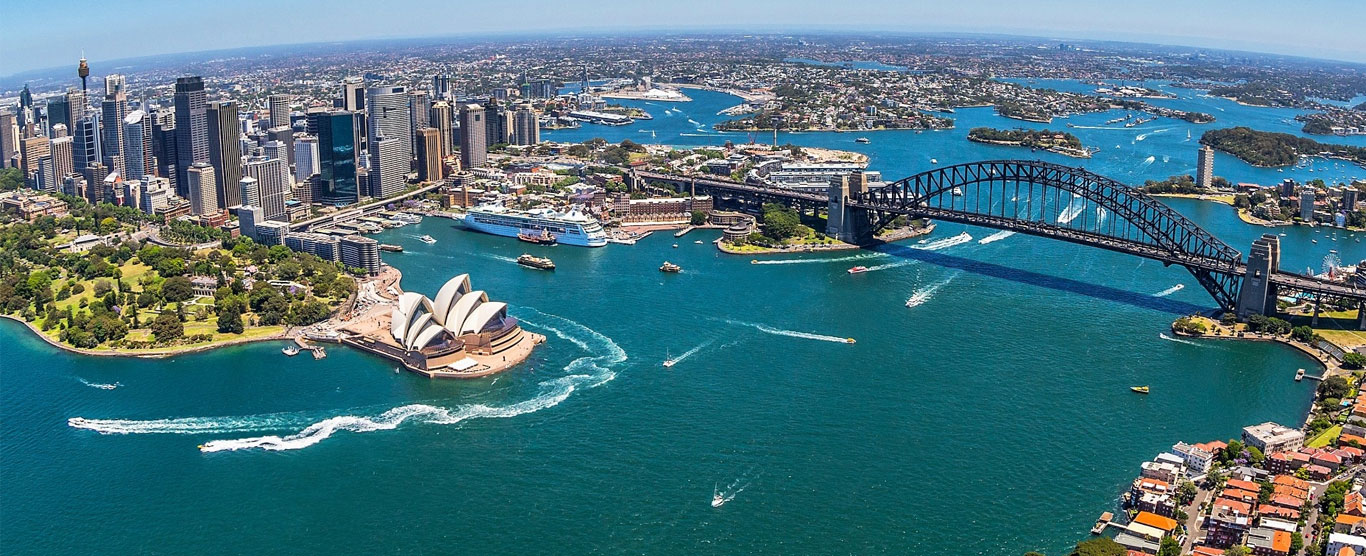
Study in Australia – Vocational courses, Bachelor’s, Master’s and Doctoral programs Study Australia is the next ‘hot’ destination after the USA, in terms of numbers, quality and living conditions. Every year, several thousand students from Nepal (around 20,000 in 2004) and throughout the world go to Australia, for world-class education, which is recognized globally and that has top-class and highly ranked universities. Australian universities and training institutions offer a wide range of courses to met most aspirations and requirements.
The curriculum and infrastructure are the latest while the faculty is up-to-date and progressive in outlook and result-oriented. The excellence in Education, the multicultural background of students, value for money, English speaking country and on top of that, Governmental and institution support for international students are some other aspects that has made Australia very attractive destination for students from all over the world to study Australia. One excellent advantage for Nepalese students is the similarity between Nepalese and Australian education systems, which are broadly patterned on the British education system. Therefore, it is easier for admission into any level without the hassle of credential evaluation, University review of qualifications etc.
Also, because of flexibility in their education system, students who have completed two years of Bachelors/Diploma could enroll directly into the 2ndyear 3rdyear of Bachelor’s program in Australian institutions. Study in Australia, Australian degrees are recognized by the Association of Nepalese Universities for purposes of government employment and further education in an Nepalese University. Main intake every year commences in February/March whereas most of the universities also have an intake in July.
There are two semesters per year, from February to June and July to November. November – February is the major vacation period. All the programs in all fields of specialization are available for study in Australian institutions at all levels. Cost of education in Australia is quite competitive when compared to other countries like UK and USA. Also, because of the ‘foreign exchange value’, Nepalese students find Australian education comparatively cheaper and more affordable!
Australia but why ?
In Australia, you have the freedom to choose a path that suits your particular goals. There are thousands of courses on offer.
Whichever course you choose, you’ll experience a unique kind of education. Studying in Australia promotes innovative, creative and independent thinking. You’ll learn to work as part of a team, to communicate effectively with others and to develop the practical skills and intellectual abilities you need for global success. Most importantly, you’ll learn how to use your initiative. Your teachers will encourage you to think of original, practical solutions to real-world problems. Upon graduation, your qualification will make you highly sought after by Australian and international employers.
The Australian education system has a strong international reputation and is known for its effective structure and innovative policy developments. Many other countries, eager to improve their own education systems, turn to Australia for advice. Australia is also one of the best places to live in. It is a young, vibrant and friendly country in which students can live, learn and grow. So if you want a quality education and a good lifestyle, Australia’s the place to be. Safety and health are also a point to be considered while traveling abroad which is a fact to be considered. Also quality education and uplift increase the eagerness to study and stay in Australia.
Interesting facts about Australia
- 6th Largest country in the world
- The population of about 25.5 million that is less than Nepal’s population.
- Australia ranks among the top 3 for the highest human development index
- Australia has over 10000 beaches
- Australian Alps receive more snow than Switzerland
- There are more sheep in Australia than humans (8:1 ratio)
- Sydney is the largest city but not the capital. Its Canberra
- Some of the deadliest animals live there
Education System
There are 39 universities in Australia offering Bachelor degrees, Master’s degrees, Doctorate, Postgraduate certificates and Postgraduate Diplomas that are recognized throughout the world. Universities are established under legislation and set their own academic requirements within strict legislative guidelines.English is the official language of Australia and the main language of instruction in the education system. As part of its commitment to the high quality of Australia’s higher education, the Australian Government has established the Australian Universities Quality Agency (AUQA). This agency is tasked with ensuring high quality of teaching and learning, research and management standards in Australian universities through a panel of expert senior academics and administrators.
There is a strong culture and tradition of leading research in Australian universities that has been internationally recognized. Australia has an integrated nationwide system of qualifications, known as the Australian Qualification Framework (AQF), which is recognized by the Australian Government. Under this, students can move easily from one level of study to the next and receive credit for previous study. It brings together the qualifications offered at different levels. There are several institutions offering Vocational courses offering Certificate and Associate Degree programs (equivalent to +2 level in Nepal), which are highly popular for their employment potential.
TAFE colleges and private institutions are highly popular in offering Vocational programs. The vast range of courses includes information technology, business and management, marketing and communications, health, science, design and the arts, television production and media, environmental studies and land management, sport and recreation, engineering and building, and hospitality and tourism. English language training and University preparation courses are also offered. TAFE courses most appropriate for students from Nepal and neighbouring Asian Countries are at Certificate II, III, IV, Associate Diploma, Diploma and Advanced Diploma level and are normally of two-year duration. After the vocational level, admission is possible at the undergraduate level, which offers Bachelor’s degrees.
The subsequent level is the Post-graduate, where Master’s programs are offered. Interestingly, the three-year degrees from Nepal are acceptable for direct admission into Master’s level programs in Australian universities. At the Master’s level, the focus is more on research, though most universities are offering professional master’s degrees too, that are suitable for gainful employment. A good academic record in Bachelors degree from a recognized University is necessary. Any work experience in the field will be helpful. For most of the MBA programs, students need to have 2-5 years of work experience along with their Bachelors Degree, in addition to good GMAT scores. MEC, study australia’s gamut of services provide total assistance and guidance about the education system, studying at all levels in your country of choice and plan your total process, right from pre-application to visa, in a professional and result-oriented manner.
For more information about our services, please visit our website. If you have any queries, please feel free to contact us.
Admission
- Make an application to the institution of choice through the MEC application fee is not refundable.
- The institution will make an offer of admission based on qualifications after assessing the application.
- The information you provide through your application must be correct.
Required Tests For admission into any level of programs, IELTS is required for admission and for visa purposes as well. For Master’s level programs in Sciences, Engineering, and Education this is the only requirement. Unlike the US, a score in GRE is not required. At the same time, some universities prefer applicants with a GRE score. However, for admission into MBA programs, a decent GMAT score, in addition to IELTS and relevant work experience of at least 2-3 years is required along with a good academic background.
Health insurance
All international students in Australia are required to have medical insurance. The Overseas Student Health Cover (OSHC) charge of A$ 354 (Approx)is payable before the student visa is issued.
Cost of Education
The average tuition fee for different programs can be: (Australian $ per year)
| Diploma | 10,000 – 15,000 |
| Bachelors Degree | 20,000 – 25,000 |
| Masters degree | 25,000 – 29,000 |
It may differ and increase up to some percentage every year.
Accommodation and living expenses:
For accommodation, students have a number of options available that can be on-campus or off-campus such as hostels, rented housing, homestay etc. The cost of living can vary depending on the city. However, on an average, a student would need between ASD$ AUD$ 12000 to AUD$18000 per annum. This amount would cover accommodation on rent, food, clothing, transport etc.
Work Prospects
Students can work up to a maximum of 20 hours per week after they start their studies and full time during vacations. However they are required to obtain a work permit by paying AS.$50 payable in Australia itself on course commencement, in favor of DIMA to obtain their work permits.
The limitations on work must be strictly observed students found working more may face deportation.
Skilled people are given higher priorities nowadays in case of obtaining the job. It is better to get some skill and knowledge before applying to Australia as work experience and trainers are given higher focus.
Universities
Australia is home to 43 universities with at least one university main campus based in each state or territory. The Australian Universities map allows you to see where each university’s main campus is located. Most universities have more than one campus and are located across multiple states and territories, providing you with a choice of where in Australia you would like to study. You can also visit the universities websites for more information.
List of Australian Universities websites of each college you prefer and get more information about the colleges.
| Australian Capital Territory
| New South Wales
|
| Northern Territory
| Queensland
|
| South Australia
| Tasmania
|
| Victoria
| Western Australia
|